
4 6 月, 2026
You’ve decided to replace those old, drafty windows. You order modern UPVC profiles, expecting decades of comfort. But here is the ugly secret of the construction market: counterfeit UPVC is rampant.
These are not “budget options”; they are often made from “recycled sludge”—a mix of crushed medical waste pipes, old cable insulation, and industrial scrap, held together with cheap calcium powder (chalk). This “calcium-filled” or “regrind” material lacks structural integrity.
Here is how to fight back and ensure you get genuine FONIRTE UPVC type material.
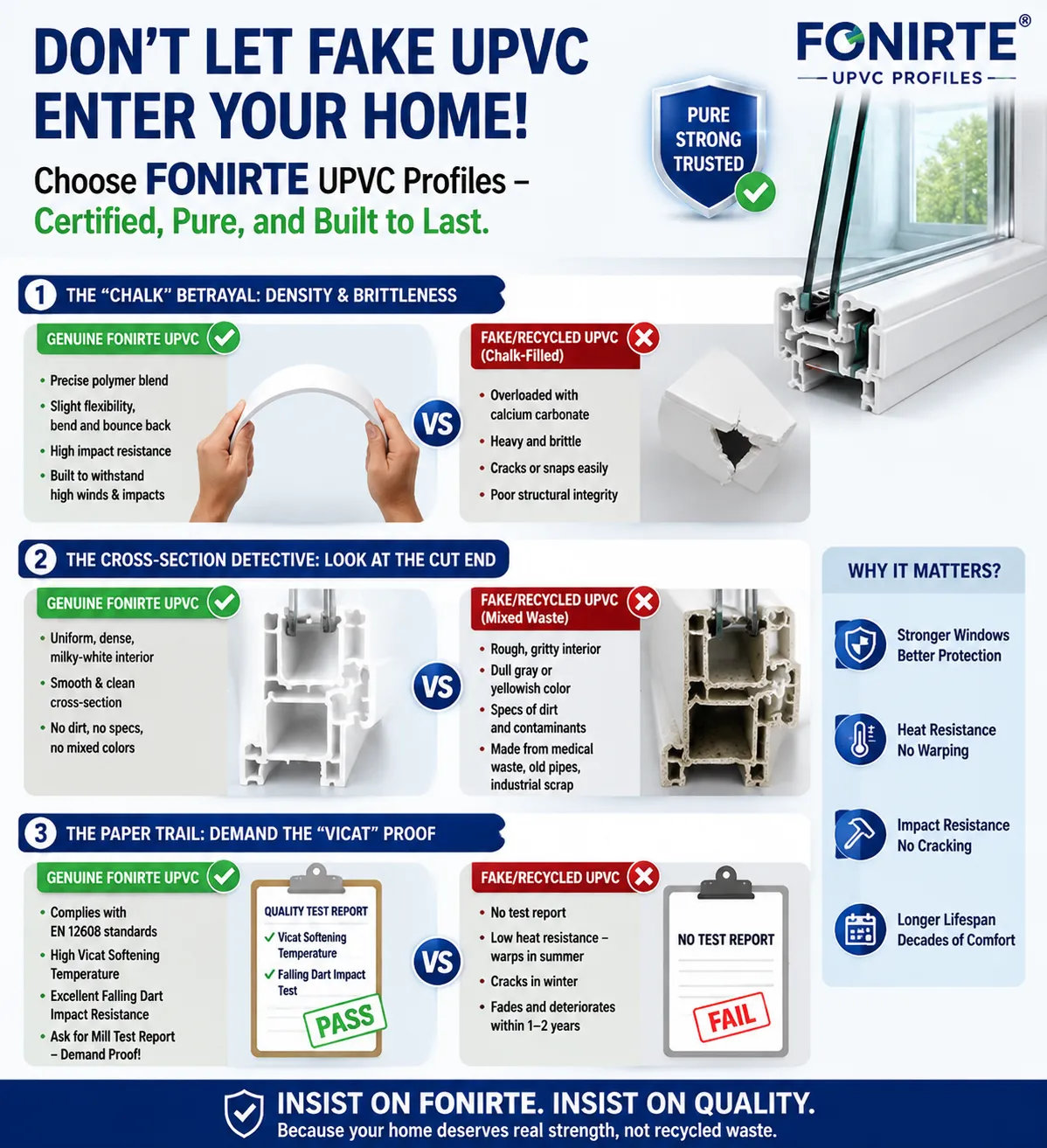
Authentic UPVC profiles are a precise polymer blend. Fake profiles, however, are often overloaded with Calcium Carbonate to cut costs. This does two terrible things: it makes the profile heavy and brittle.
Virgin UPVC Type: Has a slight flexibility. It will bend slightly under pressure before bouncing back.
Counterfeit “Chalk” Filled Profile: Lacks elasticity and will crack or snap easily under stress.
FONIRTE UPVC Profiles: Adhere to strict ASTM standards, ensuring the correct impact modifier ratio so your frames withstand high winds and accidental impacts without shattering.
You don’t need to be a chemist to spot a fake; you just need to look at the cut end. As noted in industry guidelines, high-quality UPVC type has a uniform, dense, and milky-white interior. It should look like smooth hard plastic.
What to look for on the job site:
The FONIRTE Standard: When you examine a piece of FONIRTE UPVC profiles, the cross-section is consistent, clean, and completely solid.
The Counterfeit Sign: Counterfeit “recycled” material looks like a bad asphalt road—rough, gritty, and often a dull gray or yellowish color due to mixed contaminants. If the cross-section looks like it has specks of dirt or varied colors, you are looking at medical waste and old pipes melted down into your new window frame.
Any seller can claim their product is “premium.” But in engineering, heat resistance and structural integrity are non-negotiable. When you buy, always demand to see the quality test report or mill test report. If the seller cannot provide these UPVC type specifications, you are likely holding a pile of recycled chalk.
📋 Quality Standard Checklist
| Key Test Parameter | Reference Standard | Genuine FONIRTE Performance | Counterfeit “Regrind” Risk |
| Vicat Softening Temperature | EN 12608 Standards | Certified to maintain rigidity well beyond standard climate temperatures. | Low heat threshold; will warp, sag, and fade within two summers. |
| Falling Dart Impact | ASTM / EN Guidelines | High impact resistance; guarantees the frame won’t crack during harsh winters. | High brittleness; prone to shattering under cold temperatures or sudden impacts. |