
21 7 月, 2026
Counterfeit and low-quality UPVC profiles have become a growing concern in the global construction industry. While they may look similar to genuine products at first glance, inferior profiles often contain excessive recycled materials, poor-quality additives, and inadequate UV stabilizers. These shortcuts significantly reduce the lifespan, strength, and performance of windows and doors.
For importers, fabricators, and construction companies, choosing the right UPVC profile is essential to ensure long-term customer satisfaction and minimize costly after-sales issues. This guide explains the key differences between genuine and fake UPVC profiles and provides practical methods to identify high-quality products before making a purchase.
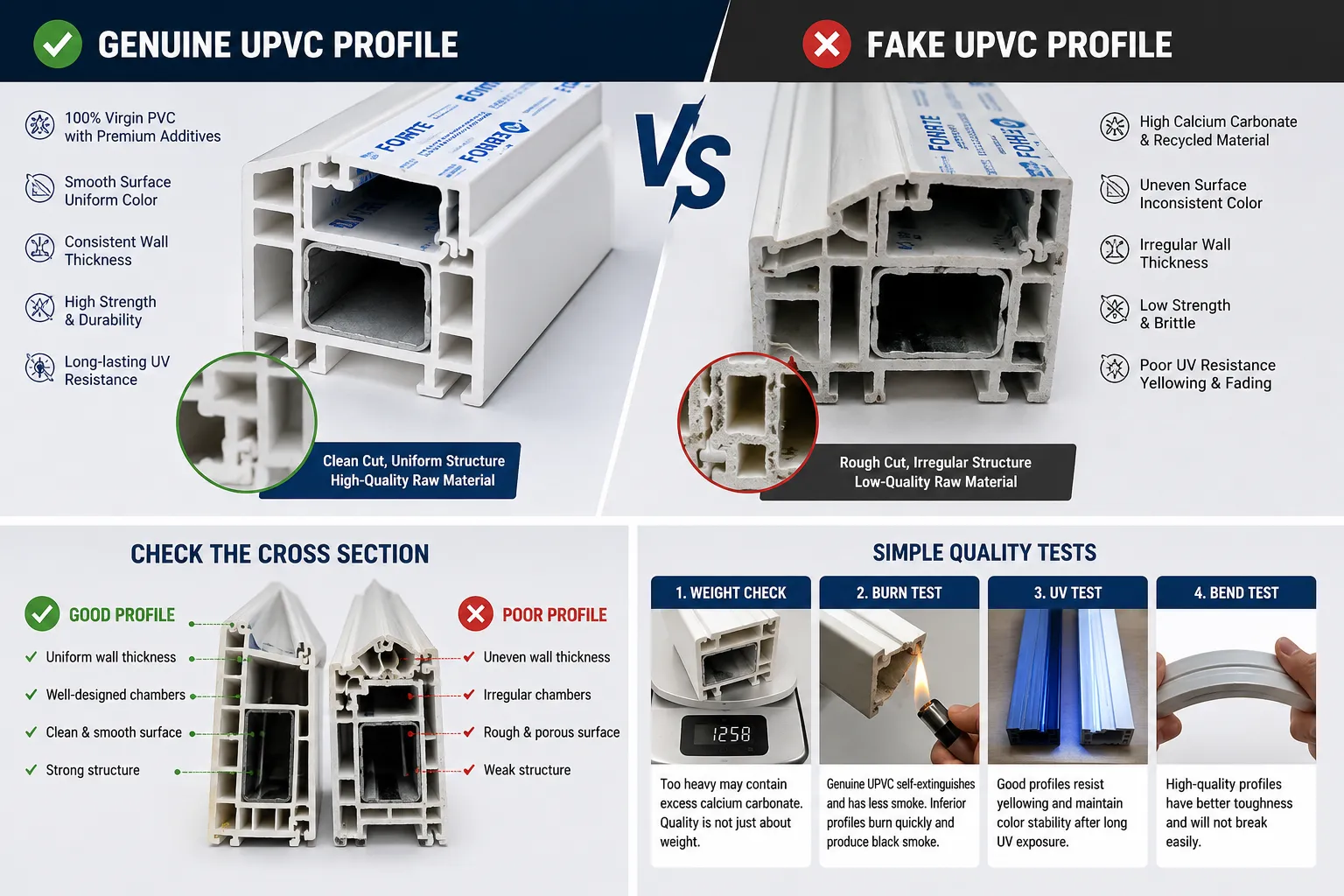
Low-cost manufacturers often reduce production costs by using excessive calcium carbonate, low-grade recycled PVC, or industrial waste materials. Although these profiles may initially appear attractive due to their lower price, they typically suffer from:
Ultimately, choosing a cheap profile can lead to expensive replacements, warranty claims, and damage to your company’s reputation.
A genuine UPVC profile should have:
Inferior profiles often display uneven coloring, rough surfaces, or visible recycled particles.
The profile cross section reveals a great deal about manufacturing quality.
Look for:
Poor-quality products may have irregular chamber walls, excessive filler, or inconsistent thickness.
Wall thickness directly affects structural strength.
Profiles manufactured according to international standards generally provide better:
Always request technical drawings or testing reports from your supplier.
Reliable manufacturers typically use:
Be cautious if a supplier cannot clearly explain its raw material formulation.
A trustworthy manufacturer should be able to provide certifications and laboratory test reports related to:
These documents demonstrate consistent manufacturing quality and compliance with industry standards.
Many buyers mistakenly believe heavier profiles are always better.
In reality, excessive weight may indicate large amounts of calcium carbonate filler rather than stronger PVC.
A well-designed profile balances structural performance with optimized material composition.
Quality UPVC profiles produce:
Poor formulations often result in weak welds and visible corner defects.
High-quality UPVC profiles are designed to withstand years of outdoor exposure without significant discoloration or brittleness.
Quality manufacturers invest in UV-resistant formulations to ensure stable performance in hot and sunny climates.
Before placing an order, consider:
A reliable supplier should be transparent throughout the entire purchasing process.
Choosing genuine UPVC profiles is about much more than comparing prices. Material quality, manufacturing standards, engineering design, and quality control all contribute to the long-term performance of windows and doors.
By carefully examining profile construction, requesting technical documentation, and working with an experienced manufacturer, buyers can avoid counterfeit products and invest in solutions that provide decades of reliable performance.
High-quality UPVC profiles may require a slightly higher initial investment, but they deliver greater durability, lower maintenance costs, and stronger long-term value for both manufacturers and end users.