
26 8 月, 2026
Wood has a timeless appeal. Its natural grain, warm colour and tactile character can make a building feel more welcoming, traditional and connected to nature. However, real timber windows and doors also require regular maintenance. Moisture can cause swelling and decay, sunlight can fade the finish, and paint or stain eventually needs to be renewed.
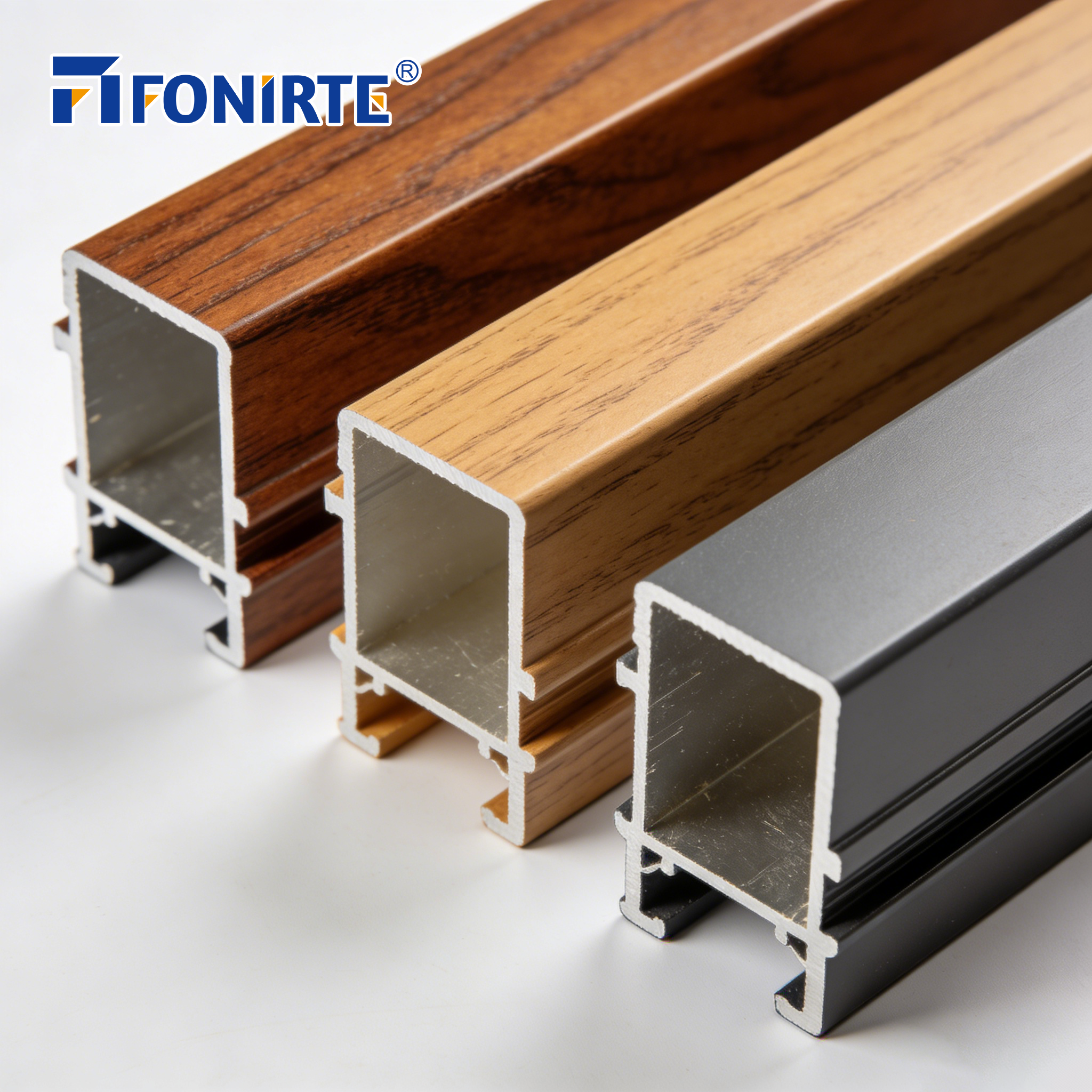
Woodgrain UPVC profiles offer a practical alternative. Using advanced surface-finishing technologies, FONIRTE transforms standard UPVC extrusions into convincing timber-look profiles inspired by oak, mahogany, walnut and other wood species. The result combines the visual warmth of wood with the insulation, durability and low-maintenance performance of UPVC.
So how is the wood effect created? The two most widely used methods are lamination and co-extrusion. Each technology has a different structure, appearance and performance profile.
Lamination is one of the most common ways to manufacture realistic wood effect UPVC profiles. In simple terms, a decorative film is bonded to the surface of a UPVC profile to create the appearance of natural timber.
High-quality woodgrain films are engineered as multilayer constructions. Each layer has a specific function:
Because the decorative layer is printed with high-definition detail, laminated UPVC profiles can reproduce complex timber patterns with a high level of visual realism. Different colours and wood species can also be selected without changing the underlying extrusion tooling.
Before the film is applied, the UPVC profile is cleaned and prepared to support a consistent bond. A suitable adhesive is applied, and heated rollers press the film onto the profile. Heat softens the film and activates the adhesive, allowing the material to follow the profile’s contours, corners and grooves.
When the process is carefully controlled, the finished laminated UPVC profile has an even, continuous appearance. Depending on the film specification, the surface may also include a subtle texture that enhances the timber effect.
Lamination is often selected when a project prioritises visual detail, colour choice and production flexibility. Its main advantages include:
For projects with typical exposure conditions and a strong focus on authentic appearance, lamination can provide an attractive balance between design and value.
Co-extrusion takes a different approach. Instead of applying a decorative film after the UPVC profile has been formed, the visible outer layer is produced at the same time as the structural core.
During co-extrusion, two UPVC-based formulations are pushed through one die at the same time:
For premium exterior applications, the outer skin may use ASA (Acrylonitrile Styrene Acrylate). ASA is widely valued for its weathering performance, colour stability and resistance to surface damage. During production, the outer skin fuses with the core to form an integrated profile structure.
A co-extruded ASA surface can offer several performance benefits:
Creating a woodgrain finish through co-extrusion requires careful control of both the extrusion die and the surface design. The die can create a subtle texture that reflects the look and feel of timber. Some systems combine this texture with secondary printing to add additional grain detail.
A true co-extruded woodgrain finish, however, relies primarily on the texture and colour of the outer skin rather than a film applied over the profile. This integrated construction is one reason co-extruded profiles are often specified for demanding exterior environments.
Both technologies can produce attractive woodgrain UPVC profiles, but the best choice depends on the project’s exposure conditions, design requirements and expected service life.
The right decision should be based on the complete profile specification, including the finish system, exposure conditions, installation details and project requirements.
FONIRTE provides both finishing technologies to match different project needs and performance expectations.
This product approach allows architects, fabricators, developers and homeowners to choose a woodgrain UPVC profile based on the actual application—not simply on appearance alone.
Woodgrain UPVC profiles can help achieve a traditional or natural architectural style without the maintenance demands associated with real timber.
They can be used to:
Unlike traditional timber, UPVC does not normally require sanding, staining, sealing or repainting as part of routine care. Regular cleaning with a suitable, non-abrasive solution can help the profile retain its appearance.
It is more accurate to describe woodgrain UPVC as low maintenance rather than completely maintenance-free. Hardware, seals, drainage paths and moving components should still be checked and maintained according to the window or door system manufacturer’s instructions.
The combination of a timber-inspired design and a weather-resistant UPVC system gives homeowners a durable alternative to painted or stained wood. The exact colour retention and service performance depend on the profile specification, installation quality, local climate and maintenance routine.
Modern woodgrain UPVC profiles can reproduce the colour variation, grain lines and tonal depth associated with natural timber. Laminated profiles are especially effective at reproducing complex printed patterns, while co-extruded profiles create a consistent colour and textured surface.
Yes, laminated UPVC profiles can be used outdoors when the film, adhesive system and profile construction are specified for the relevant exposure conditions. Always confirm the product’s weathering and installation requirements with the manufacturer.
Laminated profiles use a decorative film bonded to the outside of the UPVC profile. Co-extruded profiles are produced with an integrated coloured outer skin, often made with ASA, that is fused to the structural core during extrusion.
No. They are designed to provide the appearance of timber with significantly less routine maintenance. Cleaning is usually the main requirement, although the complete window or door system still needs normal hardware and seal maintenance.
FONIRTE’s 50A and 60-Series are laminated options suited to projects that value realistic wood effects and design flexibility. The 98105-Series uses co-extruded ASA technology for applications where enhanced UV resistance and exterior durability are priorities.
The appeal of woodgrain UPVC profiles lies in their balance. They capture the warmth and character of timber while offering the practical advantages of a modern UPVC system: durability, insulation, weather resistance and low-maintenance care.
Lamination uses photographic precision to recreate detailed wood patterns. Co-extrusion uses an integrated ASA outer skin to deliver a robust finish for demanding exterior applications. With both technologies available, FONIRTE can provide the right wood effect UPVC profile for a wide range of architectural requirements.
FONIRTE — The Soul of Wood, the Science of UPVC.
Contact FONIRTE to discuss your preferred wood effect, profile series, application environment and performance requirements.