
19 9 月, 2025
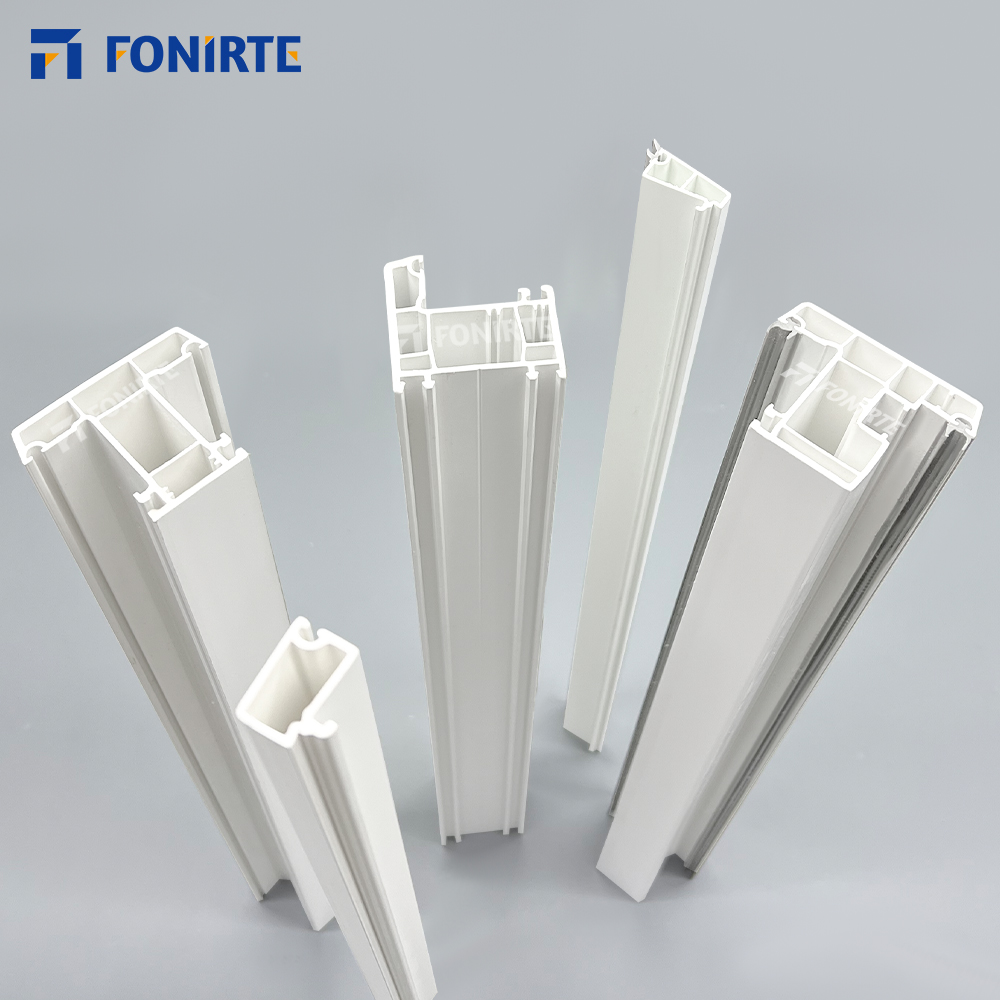
In the sophisticated world of UPVC profiles, the balance between quality and cost-effectiveness often hinges on one critical factor: calcium carbonate content. While this common filler material reduces production costs, excessive use compromises the very properties that make **UPVC profiles** exceptional performers in building applications.
⚖️ The Delicate Balance of Formulation
High-quality UPVC profiles maintain precise calcium carbonate content (typically 5-15%) to optimize performance without sacrificing integrity. Overfilling occurs when manufacturers exceed recommended limits, leading to detectable symptoms that alert professionals to substandard material quality.
👐 Tactile Telltales: The Hand Test
Professionals can identify overfilled UPVC profiles through simple manual assessments:
Surface Characteristics:
– Reduced glossiness appearing dull or chalky
– Rough texture lacking the smooth finish of quality profiles
– Uneven coloration showing inconsistent pigment distribution
Physical Response:
– Excessive rigidity feeling brittle rather than firm
– Lack of flexibility showing minimal give under pressure
– Sharp fracture patterns breaking cleanly rather than showing ductile failure
🧪 Performance Indicators: Beyond the Surface
The consequences of calcium carbonate overfilling manifest in critical performance metrics:
Mechanical Properties:
– Decreased weld strength failing at joint connections
– Reduced impact resistance showing brittle fracture in cold conditions
– Lower tensile strength compromising structural integrity
– Diminished durability shortening service life significantly
Material Characteristics:
– Increased density feeling noticeably heavier than standard profiles
– Reduced thermal stability showing greater expansion/contraction
– Poor weatherability degrading faster under UV exposure
– Inconsistent processing causing manufacturing difficulties
🔬 Scientific Verification Methods
For precise determination, several technical methods provide conclusive results:
Laboratory Analysis:
– Thermogravimetric analysis (TGA) measuring exact filler content
– Fourier-transform infrared spectroscopy (FTIR) identifying chemical composition
– Density measurement comparing against standard values (1.35-1.45 g/cm³)
Performance Testing:
– Weld strength tests assessing joint integrity (should exceed 3,500 N)
– Impact resistance evaluation using standardized falling dart tests
– Thermal stability assessment measuring heat resistance capabilities
🏭 The Manufacturing Perspective
Responsible UPVC profile producers maintain strict quality control:
Quality Assurance Measures:
– Raw material verification ensuring consistent filler quality
– Process monitoring controlling dispersion and distribution
– Batch testing maintaining content within optimal ranges
– Certification compliance meeting international standards
Cost vs Quality Considerations:
– Material savings versus performance trade-offs
– Long-term durability impacts on building owners
– Brand reputation consequences of inferior products
– Warranty claims resulting from premature failures
🌟 The Quality Difference: Optimal Formulation Benefits
Properly formulated UPVC profiles deliver unmatched performance:
✅ Excellent impact strength maintaining ductility in cold conditions
✅ Superior weldability ensuring strong, durable connections
✅ Enhanced weatherability resisting UV degradation and color fading
✅ Consistent processing enabling smooth manufacturing and installation
✅ Long-term reliability providing decades of maintenance-free service
⚠️ Consequences of Overfilling
Excessive calcium carbonate leads to multiple failure modes:
Immediate Effects:
– Installation breakage during handling and fabrication
– Joint failures at welded connections
– Surface defects affecting appearance and performance
Long-Term Risks:
– Premature aging and degradation
– Reduced energy efficiency due to compromised seals
– Increased maintenance costs for building owners
– Safety concerns in extreme weather conditions
Understanding calcium carbonate content in UPVC profiles is crucial for specifying quality materials that deliver promised performance. By recognizing the signs of overfilling and insisting on properly formulated products, professionals ensure the longevity, safety, and efficiency of building projects.
Choose UPVC profiles with confidence—where optimal formulation creates superior performance that stands the test of time. 🏗️✨
Specify smart—because quality matters in every molecule.