
5 8 月, 2026
When evaluating high-performance window and door systems, uPVC (Unplasticized Polyvinyl Chloride) profile wall thickness is one of the single most important parameters. It directly dictates a window’s structural integrity, wind-load resistance, thermal insulation, and overall lifespan.
Rather than being a single fixed number, uPVC wall thickness varies based on profile depth, application environment, and regional manufacturing standards. This guide breaks down everything you need to know about uPVC profile wall thickness to make informed decisions for residential and commercial projects.
For most commercial and residential uPVC doors and windows, the visible wall thickness of main profiles ranges from 1.5 mm to 2.8 mm.
Standard / Entry-Level Series (e.g., 60mm series): Typically features a wall thickness between 1.5 mm and 2.0 mm.
High-End / Heavy-Duty Series (e.g., 70mm & 80mm series): Designed with a wall thickness between 2.5 mm and 2.8 mm for superior structural rigidity and maximum thermal efficiency.
Different markets adhere to distinct regional standards. For instance, European standard EN 12608 categorizes profiles into Class A, Class B, and Class C:
Class A Profiles: Require a visible wall thickness of ≥ 2.8 mm (or ≥ 2.5 mm in specific regional implementations) to guarantee top-tier mechanical strength and corner weld stability.
Class B & C Profiles: Allow slightly thinner wall parameters (often 1.2 mm – 1.5 mm for non-visible walls), suitable for lower-load applications or moderate climates.
Choosing the right profile wall thickness isn’t just about meeting building codes—it impacts long-term window performance:
Higher Wind-Load Resistance: Thicker profile walls (≥ 2.5 mm) prevent frame twisting and sagging under extreme pressure, making them essential for high-rise buildings and coastal areas prone to typhoons.
Stronger Corner Welds: uPVC frames are joined through thermal welding. Thicker walls provide a larger fusion area, significantly increasing corner break strength.
Support for Heavy Double & Triple Glazing: Multi-pane energy-efficient glass units add significant weight. A robust profile prevents frame deflection over time.
Enhanced Air & Water Tightness: By eliminating frame deformation, thicker profiles maintain tight contact with weatherstripping seals, keeping out rain and drafts.
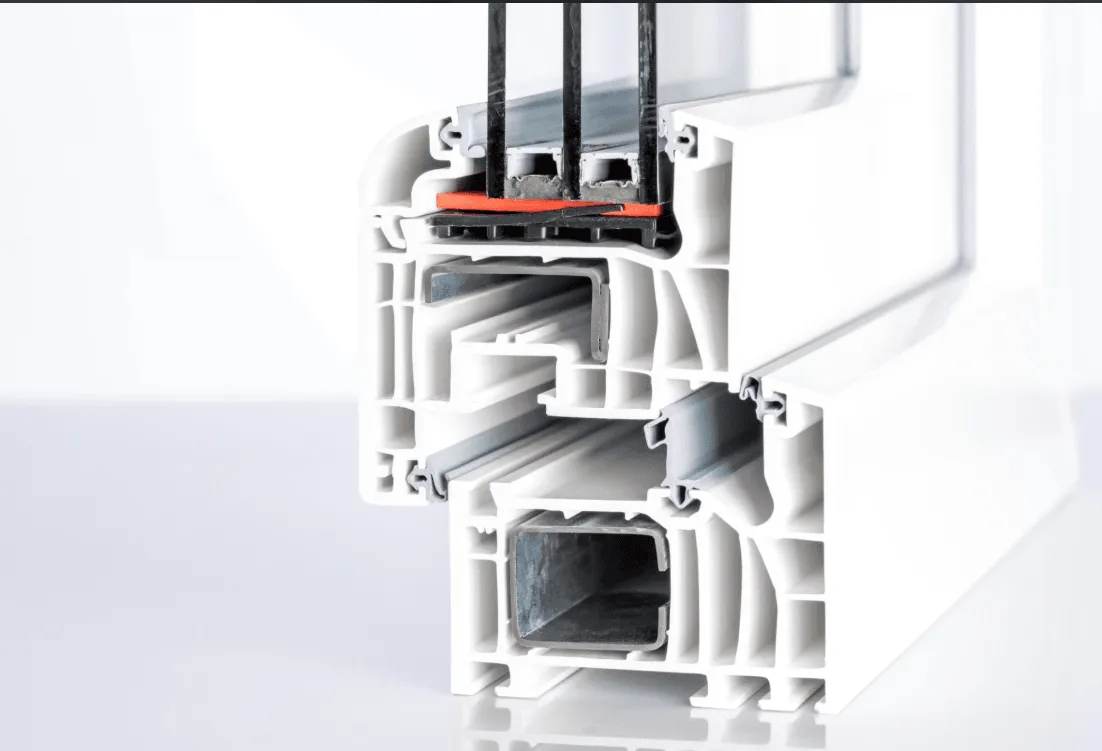
uPVC profiles feature a multi-chamber design (typically 3 to 7 chambers) to break thermal bridges. Wall thickness applies to both the outer shell and the internal structure:
Main Chamber: Houses the primary stress points and must consistently meet minimum thickness standards.
Drainage & Rib Chambers: Non-visible internal dividers and reinforcement ribs may have slightly thinner walls, provided the overall section moment of inertia meets design requirements.
Galvanized Steel Reinforcement: For large opening sizes, uPVC profiles rely on internal galvanized steel liners. The uPVC wall thickness must provide precise tolerances to hold the steel core securely without shifting.
To ensure you are buying genuine, high-quality uPVC profiles, follow these three inspection tips:
Measure the thinnest visible point on a freshly cut profile cross-section using a vernier caliper. Ensure it meets or exceeds your project’s spec requirement (e.g., ≥ 2.5 mm for premium grade).
60 Series (60mm frame depth): Best suited for standard-sized windows in low-rise residential units (1.5 mm – 2.0 mm wall thickness).
70 / 80 Series (70–80mm frame depth): Ideal for large floor-to-ceiling openings, high-rise buildings, or triple-glazed setups (2.5 mm+ wall thickness).
Be cautious of low-grade recycled uPVC. Unscrupulous manufacturers often artificially increase wall thickness to compensate for poor raw material strength, resulting in brittle frames. Premium virgin uPVC provides high impact resistance, smooth surface gloss, and long-term UV resistance at standard wall thicknesses.